








- June 12, 2025 - Jardin botanique : Favourites, Secrets of plants
Big red ones, delicate violet ones, fragrant yellow ones and edible orange ones: flower diversity is enough to make your head spin. But what’s the reason behind all these attributes?
Why a flower?
First of all, the flower is the plant’s sexual organ. It’s thanks to it that the plant organism can reproduce and generate offspring. And for that reproduction to happen, the pollen from stamens (male organs) must meet the ovule located in the pistil (female organ). Reproduction between two individuals fosters genetic diversity, essential to species’ resilience over time.
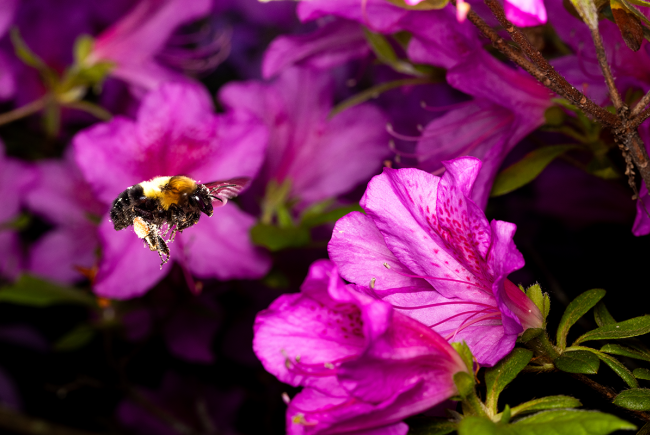
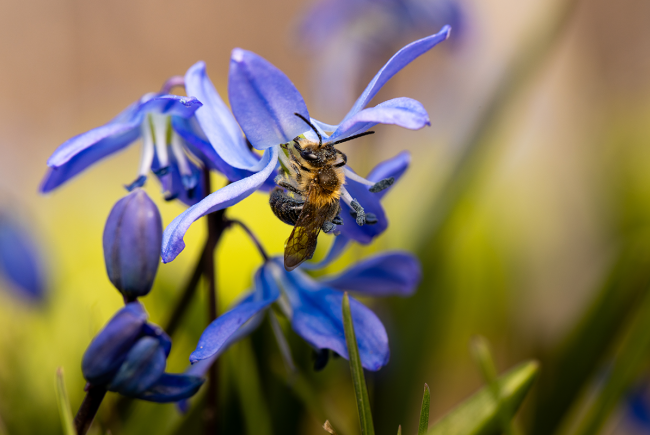
But how does a plant rooted in the soil manage to do that Flowers can draw on different strategies to ensure their reproduction. One of those consists of calling on the services of pollinators such as insects. What these do is transport pollen from one flower to another without the plant having to move. Other species may rely instead on the wind, whose currents carry pollen to another compatible flower.
Visual strategies
To our eyes, most flowers are wonderful with their brilliant colors. But pollinators’ view of this varies: animals detect different portions of the light spectrum depending on the receptors in their eyes. Wavelengths from ultraviolet to yellow, for example, are perceived by most insects. But they don’t perceive red, which happens to be highly visible to hummingbirds. Pale, light shades like white and cream mean that some flowers are more visible at night, attracting nocturnal pollinators like bats and moths.
Other insects perceive the ultraviolets reflected by certain flowers. Ultraviolet patterns may even guide pollinators to the center of a flower, offering them the promise of nectar in exchange for their help in the plant’s reproduction.
Flowers under your nose
Beyond visual attributes, flowers give off a variety of scents to attract pollinators. These perfumes are produced by specialized cells located on different parts of the flower, notably the petals. Certain perfumes, like that of the rose, are especially complex: they consist of over 200 olfactory molecules!
Among these enticing scents, phenylacetaldehyde gives off a sweet floral aroma that’s often associated with flowers rich in nectar. Bees, wasps or other insects are then lured by the promise of sweet liquid.
Some scents are specific to pollinators, while others aim to lure visitors. That’s what happens with certain flowers that emit a smell of rotten meat, such as Rafflesia and corpse flowers. Flies that are attracted this way think they’ve turned up an ideal egg-laying site. So they visit the flower, pollinate it and then deposit their eggs there – but the larvae won’t survive in it, which benefits the flower.
Admiring these sweet seductresses
There’s an impressive variety of flowering plants, each of them deploying its own seduction strategies. Sometimes discreet, sometimes flamboyant, they display their shapes, colors and scents to ensure their progeny. When we look at them up close we can almost guess what pollinators’ preferences are. And now it can be your turn to open your eyes and smell the complexity of perfumes.
From June 27 to August 17, discover Brazen Blooms at the Jardin botanique. Follow an enchanting path through the gardens dotted with flowering arches, admire the blooms, enter into the intimacy of flowers and witness their various seduction strategies. A floral rendezvous you won’t want to miss!


