





- May 6, 2026 - Jardin botanique : Favourites
The arrival of spring is synonymous with nice weather, budding trees, blooming flowers, and the chirping that heralds the return of migratory birds. Migration is a fascinating spectacle, offering unique opportunities to observe and admire birdlife while contributing to its protection.
Remarkable travelers
Migration is a natural phenomenon that takes place twice a year, in the spring and the fall. This seasonal journey is influenced by the availability of resources, forcing birds to abandon their temporary habitats and head for more suitable areas.
Migration can be extremely demanding for these little winged creatures. Preparations include building up energy reserves as well as a molting period to get their feathers ready before the big departure. But why not simply stay down south the whole year? The answer is simple: competition for food and space among species would be much too intense.
Some migratory species make short trips, while others cover thousands of kilometers in search of the ideal spot to feed and nest. The Arctic tern, for example, can travel up to 70,000 kilometers between the Arctic and the Antarctic!
Migration season: arrival schedule
Not all migratory species arrive at the same time: some of them are just passing through. At the Jardin botanique, we’re lucky to be able to observe a wide range of species thanks both to our proximity to the St. Lawrence River and to our 75 hectares of varied habitats. It’s a popular stopover before birds continue on their way north, or else the perfect place to put down roots during the breeding season.
Of all the migratory species that pass through Québec during the springtime migration, here are some of the best known:
- In March we get to observe the arrival of ring-billed gulls, Canada geese, red-winged blackbirds and song sparrows.
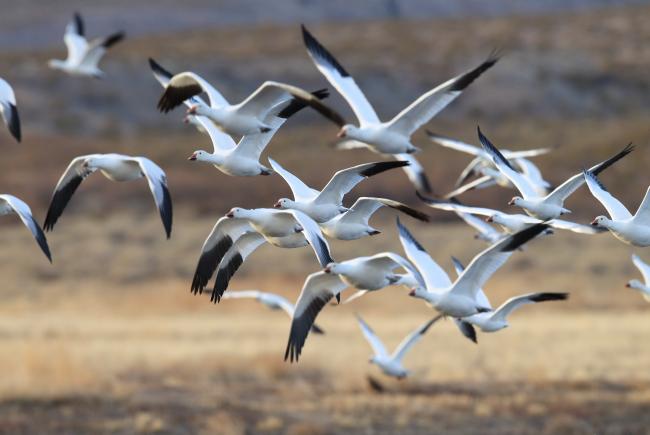
- April brings large flocks of American robins, snow geese and several species of ducks and waterfowl.
- Migration peaks in May, and is marked by the arrival of swallows, ruby-throated hummingbirds and numerous passerines (warblers, flycatchers, thrushes and vireos).
Your observations count!
This spectacular phenomenon is not without its dangers. On top of weather conditions and predation, migratory birds are subject to the impacts of human activity. Habitat alteration, urbanization, and climate change have harmful effects on the migratory success of many species.
Conservation and habitat protection are essential to providing safe spaces for migratory species throughout their journey. There are simple, effective steps to take to support that cause, such as collecting observations on community-science platforms. These databases make it possible for scientists and decision makers to gain a better understanding of trends in migratory populations and to develop appropriate conservation strategies.
On May 9, for World Migratory Bird Day, open your eyes, let yourself be amazed, and share your bird sightings on the eBird platform.
Links :


